South Kona Snorkeling with Sea Quest Hawaii: Kealakekua Bay, the Captain Cook Monument Reef, Sea Caves and a Remote Black Sand Beach

Sea Quest Hawaii's South Kona snorkeling tour holds the highest rating of any tour on this site, a perfect 5.0★ across 96 verified reviews. That score reflects what the day delivers: 5 hours on the South Kona coast covering the Kealakekua Bay marine sanctuary and its Captain Cook Monument reef, submerged sea caves and a lava tube arch, and a remote black sand beach with no road to it, all from a rigid inflatable boat small enough to go where charter vessels cannot. Gourmet deli lunch and all gear are included. This guide covers the tour itself and the site it is built around: what happened at Kealakekua Bay in 1779, why 55 years of marine protection made this the best reef on the Big Island, what you actually see underwater, and how the three ways of reaching the monument compare if you would rather not take a boat. It also ranks first among the wider list of things to do in Kona Hawaii Big Island.
About This Activity
Up to 24h in advance, full refund
Book today, pay nothing until later
Morning departure from the Sea Quest dock, Kailua-Kona
Kealakekua Bay marine sanctuary, sea caves and lava tube arch, remote black sand beach
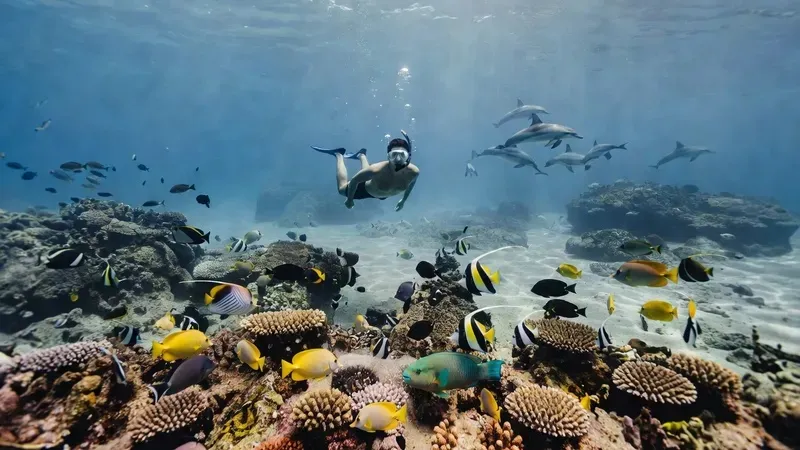
Both common in the bay: dolphins shelter in the mornings, green turtles graze the reef at depth
Prepared and served on board, included in the price, not a basic snack
Perfect score, the highest-rated snorkeling tour on the Kona coast
Check Live Availability & Book
Real-time dates for the Sea Quest South Kona snorkeling tour. Morning departures only. Arrive 15 minutes early at the Sea Quest dock.
What Sets This Tour Apart From Other Kona Snorkel Trips
The rigid inflatable boat, and why it matters
Sea Quest runs a rigid inflatable boat, the fast low-profile vessel used by coastguard and research teams worldwide, for exactly the quality that matters here: manoeuvrability in tight water. A standard charter catamaran or dive boat anchors in open water and snorkelers swim to the reef. The RIB goes directly into sea caves, holds position alongside a lava tube arch, and lands at a black sand beach that has no road access at all.
The result is three genuinely different topographies in one trip rather than three stops on the same reef system. The RIB also runs faster and flatter than a traditional charter hull, which cuts transit time and the seasickness risk that comes with sitting in a swell.
- RIB hull: low-profile, fast, manoeuvrable, reaches sites larger vessels cannot
- Sea caves: 6 to 10 foot openings, swimmable passages, resident moray eels and soldierfish
- Lava tube arch: formed where ancient flows met the ocean and cooled
- Remote black sand beach: no road exists, boat access only
- Transit speed: faster than charter catamarans, so more of the 5 hours is spent in the water
Hawaii Ecotourism Association membership
Sea Quest Hawaii is a member of the Hawaii Ecotourism Association, a certification requiring operators to meet defined standards on wildlife distancing, reef impact, educational content and sustainable practice. For an operator working daily inside a marine conservation district, that certification carries weight: it signals a commitment to the practices that keep the reef worth visiting.
In practice it means the guides identify marine life rather than just pointing at it, explain the ecology and Hawaiian cultural history of each site, and enforce the wildlife rules actively. No touching coral, required distance from turtles and dolphins, no diving gloves inside the sanctuary.
- HEA certified against wildlife and reef protection standards
- Guides cover ecology, geology and Hawaiian cultural history at each stop
- Wildlife rules actively enforced, a reliable marker of a professional operation
- Group size stays small because the RIB format caps capacity
The Captain Cook Monument: The History Behind the Snorkel Site
What happened at Kealakekua Bay in 1779
Captain James Cook arrived at Kealakekua Bay on 17 January 1779, during his third Pacific voyage. The timing mattered: the bay was in the middle of the Makahiki, a four-month season of peace and worship of the Hawaiian god Lono, and the arrival of two ships during it created a complex cultural moment. Cook and his crew were received with considerable ceremony.
The relationship deteriorated after the ships left and then returned to the bay for repairs following storm damage. A series of incidents, including the theft of a small boat, escalated into a confrontation on the beach on 14 February 1779, in which Cook was killed along with four Royal Marines.
The 27-foot white granite obelisk on the north shore was erected in 1874 by the crew of HMS Scout. The parcel of land around it, roughly a quarter of an acre, is maintained by the British government, an informal and often-contested status that makes it one of the stranger pieces of ground in Hawaii. From the water the obelisk is the landmark that orients you to the reef directly below it.
- First arrival: 17 January 1779, during the Makahiki season
- Cook's death: 14 February 1779, in a confrontation over a stolen boat
- The monument: 27-foot granite obelisk, erected 1874 by the crew of HMS Scout
- Land status: informally maintained as British ground, an anomaly unique in Hawaii
- The site sits at the base of a 1,400-foot pali with no road anywhere near it
Why 55 years of protection made this reef what it is
Kealakekua Bay was designated a State Marine Life Conservation District in 1969, one of the earliest protected marine areas in Hawaii. The designation bans commercial and recreational fishing inside the bay, restricts anchoring to designated zones, and limits vessel traffic overall.
Fifty-five years of that produces a reef that looks fundamentally unlike an unprotected one. The species fishing targets hardest, parrotfish, scrawled filefish, large wrasse and surgeonfish, are abundant and old. Parrotfish in Kealakekua reach sizes you will not see at any shore-access site on the island. Coral cover is dense because no anchor chain has been dragged across it in half a century. The difference in sheer fish biomass against any reef you can walk into near Kona is visible in the first thirty seconds.
Clarity follows from the same protection plus the geography. Visibility runs 80 to 120 feet consistently. The 1,400-foot pali on the north side shelters the bay from swell, which keeps conditions calm most of the year. Afternoon trade wind chop softens surface clarity a little, which is one of the reasons the good operators all leave early.
- Protected since 1969, one of Hawaii's earliest marine conservation districts
- No fishing, no anchoring outside designated zones, limited vessel traffic
- Visibility: 80 to 120 feet, exceptional by Hawaii standards
- Fish size: large parrotfish, old surgeonfish, big wrasse, all absent from fished areas
- Sea Quest is one of the few operators authorised to anchor in the designated zone near the monument
What You Actually See Underwater at the Monument Reef
The reef and its residents
Snorkeling the Captain Cook Monument means entering the water over the reef running out from the shoreline below the obelisk. The topography does most of the work: the reef starts at 10 to 15 feet, slopes through coral gardens, and reaches a wall that drops past 60 feet into open blue. That transition from reef to open ocean happens within easy horizontal swimming distance of the boat, which is unusual and is the single best thing about the site.
The coral is mixed hard and soft, in better condition than most reefs you can reach in Hawaii. Cauliflower coral, finger coral and lobe coral form the structural base, with scattered table coral extending over the sand patches between heads.
The fish life is the standout. Parrotfish in several species, bullethead, steephead and spectacled, run 18 to 24 inches and are everywhere. Yellow tang school in large groups. Moorish idols are common, trumpetfish hang vertically in the water column, and whitebar surgeonfish, convict tang and the endemic Hawaiian cleaner wrasse are consistently present.
Hawaiian green sea turtles graze algae on the reef structure at 15 to 20 feet, and hawksbills, which feed on sponges, favour the deeper heads near the wall. Manta rays, whitetip reef sharks resting on the sand at depth, and eagle rays all turn up here with some regularity. None of those are guaranteed, but they are likelier at Kealakekua than at any other snorkel site on the Kona coast.
- Parrotfish: large, abundant, several species, up to 24 inches
- Yellow tang: schooling, the signature fish of a Hawaiian reef
- Sea turtles: green turtles common, hawksbills occasional near the wall
- Depth: snorkeling at 10 to 30 feet, with the reef wall dropping past 60
- Visibility: 80 to 120 feet, enough to read the bottom from the surface
Spinner dolphins, and why the departure time decides whether you see them
Schools of 50 to 200 spinner dolphins shelter in Kealakekua Bay through the morning, resting after a night of feeding offshore. Boats arriving early frequently meet them inside the bay itself, and the pod will often swim alongside the hull and stay near snorkelers at the surface.
By 10 or 11 in the morning the pod typically begins moving back out toward open water for the afternoon feeding run. Early boats see dolphins. Afternoon boats usually do not. This is the clearest practical reason to take the earliest departure available and not to treat morning and afternoon slots as interchangeable.
- Pod size: 50 to 200 animals, resting after a night of offshore hunting
- Present in the bay through the morning, usually gone by 10 to 11am
- Interaction happens on the dolphins' terms; the operator keeps required distance
- Morning departures also mean glassier water and the clearest visibility of the day
- Crowds: minimal before 9am, several boats can share the anchor zone by late morning
Sea caves and lava tubes beyond the monument reef
The second and third stops are sea caves and lava tube arches along the South Kona coastline, geology formed when lava flows reached the ocean and cooled fast enough to leave hollow tubes now sitting below the waterline.
In calm conditions the caves are swimmable: you go through arched openings 6 to 10 feet wide, along short submerged tunnels, into chambers where the ceiling lifts above the waterline and daylight filters down through the rock. The walls carry encrusting coral, sponges and echinoderms, and moray eels, soldierfish and squirrelfish live in the shadows.
The third stop is the black sand beach, which has no road to it and is reachable only from the water. Getting to all three in one 5-hour window is the whole argument for the RIB format, because a larger vessel simply cannot get close enough to the cave mouths to make the second stop possible.
- Sea caves: submerged lava tube arches 6 to 10 feet wide, swimmable when calm
- Cave life: encrusting coral, sponges, moray eels, soldierfish, squirrelfish
- Access: only a small rigid inflatable can manoeuvre close enough
- Third stop: a remote black sand beach with no land access at all
- All three visited inside one 5-hour tour
Three Ways to Reach the Captain Cook Monument
By boat, which is what most people should do
There is no road to the monument, so the efficient route is a guided boat leaving Kailua-Kona or Keauhou Boat Harbor. Transit runs 20 to 30 minutes, the boat anchors in the designated zone, and you get 45 to 60 minutes in the water over the monument reef. Gear is provided, a guide is in the water with you, and the commentary covers the marine life, the bay's ecology and the history behind the obelisk.
The Sea Quest South Kona tour reviewed on this page is the top-rated of these at 5.0★ from 100 reviews, and it is the only one that adds the sea caves and the lava tube arch to the Kealakekua stop. Several other operators run Kealakekua Bay trips out of Keauhou Boat Harbor, the launch 6 miles south of Kailua-Kona and closer to the bay. Boat tours to the bay run roughly $130 to $200 per adult depending on operator, hull size and inclusions. At $200 this one sits at the premium end, and the extra sites plus the lunch are what it buys.
- Departure: Kailua-Kona or Keauhou Boat Harbor, 6 miles south of town
- Transit: 20 to 30 minutes each way
- In-water time at Kealakekua: 45 to 60 minutes
- Price range across operators: $130 to $200 per adult
- This tour: $200, 5.0★, adds the sea caves, the lava tube arch and lunch
By kayak from Napo'opo'o, for experienced paddlers with a permit
Kayaking across is possible and genuinely rewarding if you paddle. The launch at Napo'opo'o Beach on the south side of the bay sits about 1.5 miles from the monument across open water. Rental companies in Keauhou and Kealakekua rent kayaks with the required launch permit included, and the permit is not optional: Kealakekua Bay is a state park and commercial and recreational access is regulated.
The crossing is straightforward in calm morning conditions and becomes hard work in the afternoon, when northeast trades funnel across the bay. Leave before 8am for the flattest water. The payoff is arriving ahead of the tour boats and having the reef more or less to yourself for the first hour.
One caveat: landing at the monument parcel itself has been subject to access restrictions. Reef access from the water is unrestricted, but check the current state Department of Land and Natural Resources rules before you plan on stepping ashore.
- Launch: Napo'opo'o Beach, south side of the bay
- Distance: around 1.5 miles across to the monument
- Permit: required and normally bundled with a rental from Keauhou or Kealakekua
- Timing: leave before 8am, afternoon trades make the return crossing hard
- Landing ashore: restricted at times, check current DLNR rules first
On foot down the Ka'awaloa Trail, which is harder than it sounds
The Ka'awaloa Trail, usually signposted and talked about as the Captain Cook Trail, drops from a trailhead on Highway 11 near the 111 mile marker to the shore beside the monument. It is 4 miles round trip and loses 1,400 feet in the 2 miles down, over exposed volcanic rock with essentially no shade. At the bottom there is a small cove with a lava shelf entry into the sanctuary.
The honest version: it is demanding in both directions and the climb back out in afternoon heat is the part people underestimate. The trail has also been closed or restricted intermittently by the state after landslide damage and because of the pressure heavy foot traffic puts on the coastal ecosystem, so check the current status with DLNR before you build a day around it.
For most visitors the boat is a better use of the same hours: more time in the water, a guide alongside you, all gear provided, and no 2-mile climb in the sun at the end of it.
- Distance: 4 miles round trip, 1,400 feet of elevation change
- Difficulty: strenuous, steep, exposed volcanic rock, no shade
- Trailhead: Highway 11 near mile marker 111, south of Kailua-Kona
- Status: periodically closed, always check DLNR before setting out
- Water and sun protection are not optional on this one
Practical Details: Who It Suits and What to Bring
Who this tour is best for
If you are going to do one guided snorkel trip in Kona, this is the one to do. It works for:
- Snorkelers who want the richest reef within reach of Kona, at a quality no shore site can match
- Visitors who prefer small groups, since the RIB caps capacity
- Travellers interested in marine ecology, volcanic geology and Hawaiian cultural history
- Photographers, because Kealakekua's visibility and fish density produce the best underwater footage in Kona
- Adults and children over 5 who can snorkel independently
Who it does not suit, and what to bring
Boarding a RIB means stepping down onto an inflatable hull in the water, which needs basic mobility. A few guests are excluded outright:
- Not suitable for: children under 5, pregnant women, anyone with back problems or significant mobility impairment
- Bring: swimwear, since mask, fins, snorkel, towels and sunscreen are all provided
- Bring: reef-safe sunscreen if you prefer your own, as chemical sunscreens are banned in Hawaii to protect coral
- Bring: motion sickness medication if you are prone, because the RIB transits are fast and the open-ocean legs move
- Bring: an underwater camera or action camera, the one piece of kit nobody regrets here
- Not allowed: touching coral or marine life, or wearing diving gloves inside the sanctuary, both carrying real penalties
- Arrive 15 minutes before departure at the Sea Quest dock for gear and the safety briefing
South Kona Snorkeling and the Captain Cook Monument: Frequently Asked Questions
Can you snorkel at the Captain Cook Monument in Kona Hawaii?
Yes, and the reef below the monument in Kealakekua Bay is widely rated the best snorkeling site on the Big Island. The bay has been a State Marine Life Conservation District since 1969, with 80 to 120 foot visibility, dense coral, large parrotfish and schooling yellow tang, green sea turtles, and spinner dolphins in the mornings. There is no road to the monument, so access is by boat, by kayak, or down the steep 4-mile round-trip Ka'awaloa Trail.
How do you get to the Captain Cook Monument for snorkeling?
Three ways. A guided boat from Kailua-Kona or Keauhou Boat Harbor takes 20 to 30 minutes and provides all gear, which is what most people do. A kayak from Napo'opo'o Beach on the south side crosses about 1.5 miles and needs a launch permit, best done before 8am. Or the Ka'awaloa Trail from Highway 11, 4 miles round trip with 1,400 feet of elevation change on exposed rock, periodically closed and not a casual outing.
What is included in this South Kona snorkeling tour?
All snorkel equipment (mask, fins, snorkel, towels, sunscreen, wetsuit top on request), a gourmet deli lunch served on board, guided snorkeling at three sites (Kealakekua Bay, the sea caves and lava tube arch, and a remote black sand beach), and naturalist commentary throughout. Nothing else needs buying. Arrive in your swimsuit.
What marine life will I see at Kealakekua Bay?
Common sightings are large parrotfish in several species up to 24 inches, schooling yellow tang, Moorish idols, trumpetfish, Hawaiian green sea turtles, occasional hawksbill turtles, and morning pods of 50 to 200 spinner dolphins. Less common but genuinely possible: manta rays, whitetip reef sharks resting on the sand at depth, and eagle rays. Fifty-five years without fishing pressure is why the numbers and the sizes are what they are.
Why is the snorkeling at the Captain Cook Monument so good?
The bay has been a State Marine Life Conservation District since 1969, meaning no fishing, no anchoring outside the designated zones and limited boat traffic for over half a century. The reef has recovered undisturbed. The result is fish biomass, fish size and coral cover that do not exist at shore-access sites where fish are still taken. The 1,400-foot cliff on the north side also shelters the water, keeping it calm and clear most of the year.
Why does this tour hold a perfect 5.0★ rating?
Three things show up repeatedly in the 100 reviews: site access, since the RIB reaches Kealakekua Bay plus sea caves that larger boats cannot enter; the lunch, which is a proper deli spread rather than crackers and fruit; and the guiding, from HEA-certified naturalists who explain what you are looking at. Premium site, premium food and premium guiding at $200 is the combination that keeps producing perfect scores.
Is the tour worth $200 per person?
For anyone who wants the single best snorkel day on the Big Island, yes. The $200 covers Kealakekua Bay, which you cannot drive to, sea caves reachable only by small boat, a black sand beach with no land access, a gourmet lunch, all gear, and expert guiding across 5 hours. The perfect rating across 100 reviews is the clearest signal that the price lands where it should.
Is morning really better than afternoon at Kealakekua Bay?
Yes, on three counts. The resting dolphin pod is in the bay through the morning and usually gone by 10 or 11. Morning water is glassy and gives the clearest visibility of the day, before the northeast trades build after 11. And crowds are minimal before 9am, whereas several boats can share the anchor zone by late morning. Take the earliest departure available, without exception.
Is the Ka'awaloa Trail open for hiking down to the reef?
It opens and closes. The state has restricted access at various points because of landslide damage, erosion and resource protection, so check the current status with Hawaii's Department of Land and Natural Resources before planning around it. Even when open it is a strenuous 4-mile round trip with 1,400 feet of elevation change on exposed volcanic rock, and the climb out is done in the heat of the day.
How long does the tour take and where does it leave from?
About 5 hours from dock to dock, leaving from the Sea Quest dock in Kailua-Kona. That covers 20 to 30 minutes of transit to the bay, 45 to 60 minutes in the water at the monument reef, a second in-water session at the sea caves and lava tube arch, the black sand beach stop, and the return leg, with lunch served on board during transit. Hotel pickup is not included, so arrange your own transport and arrive 15 minutes early.