Kona Manta Ray Night Snorkel — Which Tour to Book, and What the Booking Pages Leave Out

Roughly two dozen boats run a Kona manta ray night snorkel on a normal evening, they charge anywhere from $75 to $175 for what looks like the same two hours, and no state agency inspects any of them. That last part surprises most people: manta viewing off Kona is still completely unregulated, so the choice of operator is genuinely yours to make rather than a formality. This guide sets out the three viewing sites, the questions that separate a good boat from a crowded one, and what each operator's "no mantas" policy actually pays out. It sits alongside the rest of our Kona activity comparisons, and if you are still building the week, how many days you need in Kona shows where an evening trip fits and what a Kona trip costs puts this price beside everything else.
Quick answer The three sites, the real price band, and the policy that decides it
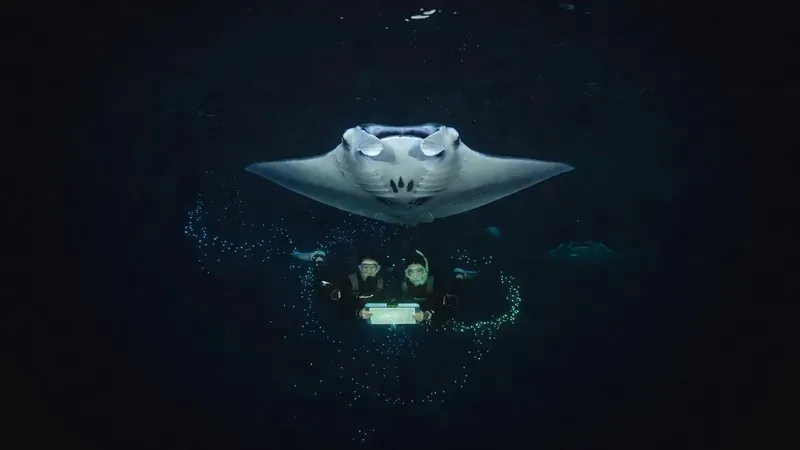
A Kona manta ray night snorkel takes you by boat to one of two lit feeding sites — Manta Village off Keauhou Bay or Manta Heaven (Garden Eel Cove) off Makako Bay near the airport — where you hold a floating light board at the surface while reef manta rays feed on plankton a few feet beneath you. Operator-published adult fares run from $75 for deck-only viewing to $175 for a small-boat guided snorkel, checked September 2026. Nothing about the activity is licensed or capped by the state, so crew-to-guest ratio and the no-sighting policy are the two things worth comparing before price.
Key takeaways
- Two boat-accessible sites, and your departure harbour decides which one you get: Honokōhau boats run to Manta Heaven, Keauhou boats to Manta Village.
- Published adult fares span $75 to $175 for what is broadly the same 45–60 minutes in the water.
- The best-rated in-water trip is $122 with hotel pickup, a free repeat cruise if no mantas show, and a ride-along option for anyone not swimming.
- Deck-only viewing starts at $75 and takes children from age five — the practical answer for families.
- There are no state rules governing manta viewing: Hawaii Ocean Watch suspended its operator green list in 2023 rather than certify boats at overcrowded sites.
- Ask about crew-to-guest ratio — the recommended standard is one crew member per eight guests in the water.
About This Activity
Up to 24h in advance — full refund
Hold your date today, pay nothing until later
Departs Honokōhau Harbor around sunset; hotel pickup and drop-off included
Swimmers hold a light board at the surface; a ride-along seat needs no swimming at all
Plankton feeders, commonly 8 to 12 feet across — no sting, no biting teeth
The operator's own policy is a free repeat cruise — confirmed at checkout, not a sighting promise
Check Live Dates & Prices
Live availability for the Kona manta ray night snorkel. Peak weeks in summer and around the winter holidays sell out well ahead.
What a Kona Manta Ray Night Snorkel Costs in 2026
Published adult fares, side by side
Every figure below is the operator's own published adult rate, read off its booking page or ours on 5 September 2026, together with the departure harbour that determines which site the boat runs to and the policy it applies when no manta ray turns up. Prices are per adult before tax and any gear surcharge, and they move with season and demand — treat the table as the shape of the market rather than a quote. The spread is wider than the experience is: a $75 deck ticket and a $175 small-boat snorkel visit the same lit water on the same night.
- Deck-only viewing is the cheapest ticket by a distance and the only one most five-year-olds can join.
- The middle of the market — $99 to $139 — is where nearly every in-water group trip sits.
- Above $150 you are buying boat size and crew ratio, not a better manta site.
- Minimum ages are not uniform: five for deck viewing and for Manta Ray Night Snorkel Hawaii, seven at Sea Quest, ten at Big Island Divers, and several boats publish none at all.
- Nobody sells a sighting. Every policy above is a repeat trip, and two operators do not publish one at all.
| Operator / trip | Adult fare | Departs from | If no mantas appear |
|---|---|---|---|
| Kona Coast Boat Tours — deck viewing | $75 | Honokōhau | Not published |
| Kona Snorkel Trips | $99 | Honokōhau | Not published |
| Kona Manta Ray Snorkel Tours | $118 ($110 non-swimmers, under 18, military) | Keauhou | Not published |
| Hang Loose Boat Tours — in-water snorkel | $122 | Honokōhau | Free repeat cruise |
| Big Island Divers | $129 plus tax and gear | Kailua-Kona | 50% off a booked seat, or free standby |
| Sea Quest Hawaii | $135 | Keauhou | Free repeat trip, or an afternoon Captain Cook snorkel |
| Manta Ray Night Snorkel Hawaii | from $139 | Honokōhau | Free standby repeat |
| Jack's Diving Locker | $175 plus tax and fees | Kailua-Kona | "Manta guarantee" — rebook terms on request |
Where the price differences actually come from
Three things move the number, and none of them is the manta rays. The first is boat size: a 28-foot Zodiac capped at eighteen guests costs more per head than a catamaran carrying forty. The second is what the fare bundles — Hang Loose includes hotel pickup and drop-off and a warm freshwater shower on the boat, Big Island Divers quotes $129 before tax and gear rental, and Jack's Diving Locker runs a longer evening with two guided in-water sessions. The third is simply the harbour: Keauhou departures are a short hop to Manta Village, while Honokōhau boats have a longer run either north to Manta Heaven or south along the coast.
What the fare does not buy is a different animal. All the boats work the same handful of lit patches of reef, often on the same night, sometimes within sight of each other.
The Three Manta Ray Viewing Sites Off Kona
Manta Village, Manta Heaven, and the one you cannot book
Hawaii Ocean Watch counts three established manta viewing sites on this coast, and the names on your booking confirmation will be one of them. Knowing which you are going to tells you more about your evening than the price does — it sets the boat ride, the crowd and, on a windy night, whether the trip runs at all.
Manta Village sits off Kaukalaelae Point at Keauhou Bay, in front of the resort whose lights first drew the rays there in the 1970s. It is reachable only by boat, it is the shortest run for Keauhou operators, and it is the busier of the two commercial sites.
Manta Heaven, known as Garden Eel Cove by day, lies in Makako Bay near Keāhole Point and the airport. Boats out of Honokōhau Harbor — including both trips we list — run north to it. It is the deeper and generally the calmer of the two on a trade-wind evening.
Manta Point, in Kaunaʻoa Bay on the Kohala Coast, is the one you will not find on any booking page: motorised vessels are barred from the bay and the shallow site is reached only from a private beach. If a listing claims to take you there by boat, that is a reason to ask questions.
How busy it gets after dark
This is the part the booking pages omit. Hawaii Ocean Watch describes fifteen to thirty boats and two hundred to four hundred people in the water on a nightly basis at the two commercial sites — a fleet that grew exponentially from a single boat visiting once a week in 1991. You are not going to have the mantas to yourself, and any listing that implies otherwise is selling you something it does not control.
It is still worth doing. But go in expecting a floodlit, crowded, faintly surreal scene of rafts of snorkellers on the surface with rays working the plankton beneath them — and pick the boat that puts fewest people around your own light board.
- Fifteen to thirty boats and 200–400 people in the water on a normal night at Manta Village and Manta Heaven (Hawaii Ocean Watch)
- In 1991 the same activity meant one boat, one site, one night a week
- An estimated 80,000 people snorkel or dive with Kona's mantas each year
- Smaller boats do not get a quieter site — they get a smaller group around your own light
Nobody Regulates This — Which Is Why the Operator Choice Matters
There are no manta viewing rules in force
Hawaii has never adopted a rule governing manta ray viewing. The state's Division of Boating and Ocean Recreation drafted one — two designated zones at Makako Bay and Kaukalaelae Point, a cap of 24 commercial permits in each, a ceiling of 60 paying passengers per boat per day, viewing hours fixed between 4pm and 4am, and a $300 monthly permit fee on top of the ordinary commercial use permit. The Board of Land and Natural Resources approved starting the rulemaking in October 2022. It has not finished. The companion bill, HB1090, cleared the legislature and was vetoed by the governor; a follow-up bill died in committee. As of 2026 the caps and the permit remain proposals.
So the code of conduct the boats work to is voluntary. It was written in April 2013, after state and federal officials brought the operators together, and it has no enforcement behind it. The substance is sensible — divers stay on the bottom and snorkellers at the surface, guests stay with their guide, nobody touches a ray, captains do not drive through water where people or animals are active, photographers mark themselves with two lights — but it binds only the operators who choose to follow it.
- No state or federal rule regulates manta ray viewing in Hawaii as of September 2026
- DOBOR's proposed rules — 24 permits per zone, 60 passengers per boat per day, a $300 monthly permit — began rulemaking in October 2022 and are still unfinished
- HB1090 passed the legislature and was vetoed; the follow-up bill died in committee
- The Manta Tour Operator Standards, written April 2013, are voluntary with no enforcement
- Touching a manta is against those standards, not against a law — do not do it either way: contact strips the mucus layer that protects the animal's skin
The green list that stopped being published
Hawaii Ocean Watch used to run a short green list of operators meeting the safety and sustainability criteria. It suspended the list in 2023, and the reason is worth reading twice: with the crowding now normal at Keauhou and the airport site, it considers compliance virtually impossible for any company working there, and the activity itself inherently unsafe at that density.
That is an uncomfortable thing for a page that also sells tours to print, so we will be plain about it. We think the encounter is worth doing and we earn a commission if you book through us. The people who have watched this fishery longest will not currently name a boat they endorse, and you should factor that into the decision rather than take a five-star average as the whole story.
Five questions to ask before you book
In place of the green list, Hawaii Ocean Watch publishes the questions to put to an operator. They are the most useful screening tool available, and any decent boat answers all five without hesitating.
- Which viewing site do you go to? Manta Village, Manta Heaven, or neither — a vague answer is itself an answer.
- Does the boat stay put at the site, and how? Live-boating with engines running near swimmers is what the standards exist to stop; a taxi drop-off is a red flag.
- What is your crew-to-guest ratio in the water? The recommendation is one crew member per eight guests or fewer.
- How experienced is the crew? Ask about training, lifeguard certification and first aid, not years in business.
- What are your cut-off criteria for cancelling? A boat that has never cancelled in winter is not a boast.
What Actually Happens in the Water
The method, and why it works every night
The mechanism is simple enough that it has not changed in fifty years. Lights are put in the water — mounted under the boats and on floating boards at the surface. The light concentrates plankton. The plankton draws reef manta rays, which feed by swimming open-mouthed through the densest patch, cephalic fins unfurled, turning tight backward loops through the same cloud again and again.
You hold the float board face-down at the surface with your arms and legs still, and the rays pass underneath you, sometimes close enough that you feel the water move. Staying still is not a courtesy, it is the technique: a ray tracking a plankton cloud will hold its line past a motionless row of snorkellers and break off from a kicking one. Guides in the water are there to keep the line together and keep hands off the animals.
A scuba variant runs at the same sites, with divers kneeling on sand around lights and watching the rays roll overhead. It needs certification, costs more, and is a different picture of the same event — most visitors do the snorkel.
- Reef manta rays: plankton feeders, no sting and no biting teeth, commonly 8 to 12 feet across
- In-water time is typically 45 to 60 minutes; the whole trip runs 1.5 to 3.5 hours depending on the operator
- You float — no freediving, no certification, and the board carries you
- Never touch a ray: contact damages the mucus layer that protects its skin
- Every ray is identified by its belly spot pattern, and guides on the better boats name them as they pass
How likely you are to see one
Operators publish their own figures and they cluster tightly: Jack's Diving Locker reports an 85 to 90 per cent success rate, several Manta Village boats report sightings on over 90 per cent of nights, and Manta Heaven runs slightly behind that at around 90 per cent. Nobody audits these numbers, but they agree with each other and with the fact that most companies are willing to put a free repeat trip behind them.
What none of that gives you is a guarantee. These are wild animals in open water, the blank nights are real, and the compensation on offer is another boat ride — which is only worth something if you are still on the island. If your trip is short, book the manta night early in the stay rather than on your last evening, so a re-ride is actually available to you.
- Operator-reported sighting rates run in the high 80s to low 90s per cent
- Nights with more than one ray are normal; the count varies with plankton and season
- A no-sighting policy pays out in a repeat trip, never in a refund
- Book it for the start of your stay so the re-ride is usable
When to Go, and What to Take
Season, sea state and moon
Tours run year-round, and the mantas feed year-round — the variable is not the animals but whether the boat goes out. From roughly April to October the sea off this coast is at its calmest, which is why operators point at those months: fewer cancellations, an easier crossing and a flatter surface to float on. From November into March swell and wind pick up, trips do get called off, and a winter booking wants a spare evening behind it.
Moon phase makes a smaller difference than the internet suggests. A darker sky sharpens the contrast around the lights; a full moon does not send the rays away. Ocean conditions and how many boats are on site will shape your night far more.
One date to avoid for reasons that have nothing to do with mantas: the IRONMAN World Championship lands in Kailua-Kona on Saturday 10 October 2026, and rooms, cars and boat seats around it price up and sell out. Our guide to the best time to visit Kona works through the rest of the calendar.
- April to October: calmest seas, fewest weather cancellations
- November to March: workable, but keep a backup evening
- Darker moon phases give better contrast; a bright moon is not a write-off
- Around 10 October 2026 (IRONMAN week) everything in Kailua-Kona is booked out
What to bring, and who should sit this one out
Wetsuit, mask, fins and snorkel come with every trip on the list above. What people underestimate is the ride home: you come out of the water wet, at night, on a moving boat, and the wind is cold even in August.
- Swimsuit worn under your clothes, a towel, and a warm layer or windbreaker for the return leg
- A change of clothes — the Hang Loose boat has a warm freshwater shower on board
- Motion sickness tablets taken the night before if you are prone to it; the lit site involves floating in swell
- Sunscreen bought on the Big Island is mineral-only by county law — bring what you already own if you prefer something else
- Not suitable while pregnant, or with serious heart, back or lung conditions
- Minimum ages differ by boat, from five for deck viewing to ten for some dive operators — confirm before you pay
Which Version of the Night Suits You
If you are a confident swimmer and want the encounter itself
take the in-water snorkel. The $122 Hang Loose trip is the best-reviewed of them at 4.9★ from 1,492 reviews, includes hotel pickup, and puts you on the light board where the rays actually pass.
If you are travelling with young children, or you would rather not swim
take the deck-viewing trip. Kona Coast Boat Tours runs it from $75, takes children from age five, and lets anyone who changes their mind get in on the night.
If you want to be there but the dark water worries you
book the in-water tour and take the ride-along seat instead of the board — same boat, same site, no swimming, and you can still change your mind at the ladder.
If your stay is short
book the manta night for the first free evening, not the last. Every no-sighting policy on this coast pays out in a repeat trip, and a repeat trip is worthless once you have flown home.
Kona Manta Ray Night Snorkel — Frequently Asked Questions
Is the manta ray night snorkel worth it?
For most people, yes — it is the single experience Big Island visitors talk about afterwards, and it exists in a reliable form in very few places. Two honest caveats: you will share the site with fifteen to thirty other boats and a few hundred other people, and nobody can promise a ray will show. If floating in dark open water sounds unpleasant, the deck-viewing trip delivers most of the spectacle with none of that.
Which manta ray night snorkel tour is the best in Kona?
There is no certified answer, because Hawaii does not regulate manta viewing and Hawaii Ocean Watch suspended its operator green list in 2023. On the numbers, the $122 Hang Loose in-water trip is the best-reviewed we list at 4.9★ from 1,492 reviews, with hotel pickup and a free repeat cruise if no mantas appear. Before you book anything, ask the operator the five screening questions — crew ratio and boat handling separate the boats far more than star ratings do.
How much does a Kona manta ray night snorkel cost?
Published adult fares ran from $75 for deck-only viewing to $175 for a small-boat guided snorkel when we checked in September 2026, with most in-water group trips between $99 and $139. Some prices exclude tax and gear rental. The full operator comparison sets them side by side with departure harbour, minimum age and no-sighting policy.
Where do the Kona manta ray tours actually go?
To one of two boat-accessible sites: Manta Village off Kaukalaelae Point at Keauhou Bay, or Manta Heaven — Garden Eel Cove by day — in Makako Bay near the airport. Your departure harbour decides which: Keauhou boats run to Manta Village, Honokōhau boats including both trips we list run north to Manta Heaven. A third site, Manta Point in Kaunaʻoa Bay, is closed to motorised vessels and is not commercially bookable.
Are manta ray sightings guaranteed?
No, and no operator sells them as such. Companies report their own success rates in the high 80s to low 90s per cent, and most back that with a policy rather than a promise: Hang Loose offers a free repeat cruise, Sea Quest a free repeat trip or an afternoon Captain Cook snorkel, and Big Island Divers half off a booked seat or a free standby seat. All of those are only usable if you are still on the island, so book early in your stay.
How old do children have to be?
It depends entirely on the boat, and the range is wide. Deck viewing with Kona Coast Boat Tours takes children from five, Sea Quest sets its in-water minimum at seven, and Big Island Divers requires ten plus the ability to swim unaided in open ocean. Several operators publish no minimum at all, which means asking. For younger families the deck trip is usually the only workable option.
Are manta rays dangerous?
No. The reef mantas off Kona are plankton feeders with no sting and no biting teeth, commonly eight to twelve feet across. The risk on a manta night is ordinary boat-and-open-water risk — cold, swell, darkness, crowding and propellers — which is exactly what the voluntary operator standards address. Never touch a ray: contact strips the mucus layer that protects its skin, and it is prohibited by those standards.
Can I do it as a scuba dive instead?
Yes, at the same sites. Certified divers kneel on sand around the lights and watch the rays roll overhead, which many divers rate above the surface view. It costs more, needs certification, and several operators — Big Island Divers and Jack's Diving Locker among them — run combined charters carrying divers and snorkellers on the same boat.
What else is worth doing after dark in Kona?
Manta night is the headline, but the Mauna Kea summit and stargazing trip and the twilight volcano and stargazing tour are the other two evenings people remember. Daylight hours are covered in our guide to snorkelling around Kona.