The Best Time to Visit Kona, Hawaii: Month by Month

The best time to visit Kona Hawaii is not settled by temperature, which barely moves. The airport's normal high swings about six degrees across the entire year, from 81.5°F in February to 87.3°F in August. What actually changes is rainfall, whale season, and one October week you'll want to plan around rather than land in the middle of. Here's what runs in Kona month by month, with the NOAA numbers behind every claim.
Quick answer
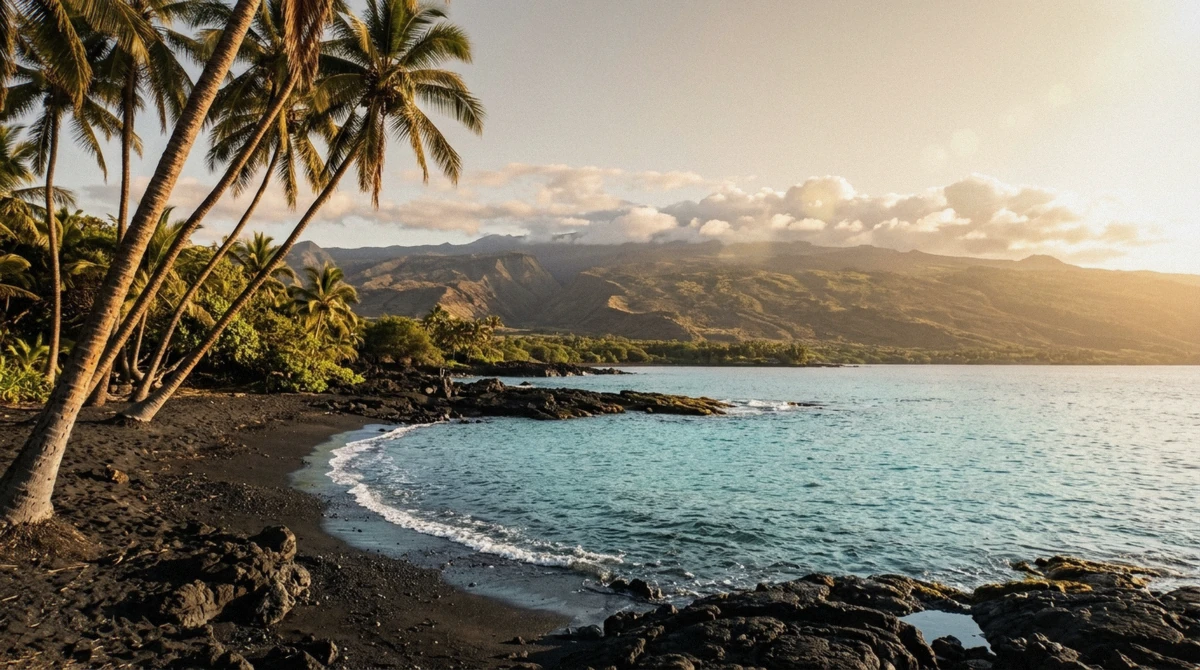
April through October is Kona's driest, warmest stretch, with July averaging just 0.49 inches of rain and August running the warmest at a normal high of 87.3°F. December through April overlaps with humpback whale season, the trade-off being slightly wetter months, January's normal is 1.35 inches, the wettest of the year. There isn't a true bad month weather-wise; the one week worth avoiding unless you want it is built around a single event, not the climate.
Key takeaways
- April through October runs driest and warmest; December through April adds whale season at the cost of a bit more rain
- August is the warmest month at a normal high of 87.3°F; February is the coolest at 81.5°F
- Whale watching runs roughly December through April, peaking January to March, and federal law keeps boats and swimmers at least 100 yards away
- The IRONMAN World Championship lands in Kailua-Kona on Saturday, October 10, 2026, when accommodation and rental cars sell out and price up
- Hawaii County has sold only mineral sunscreen since December 1, 2022, a detail worth packing around no matter which month you visit
- The whale watching cruise only runs December through April; the manta ray night adventure runs every month of the year
Tours by Season
One seasonal tour, one year-round anchor, and one that fills a shoulder-season day well.
 from $115
Top Rated
from $115
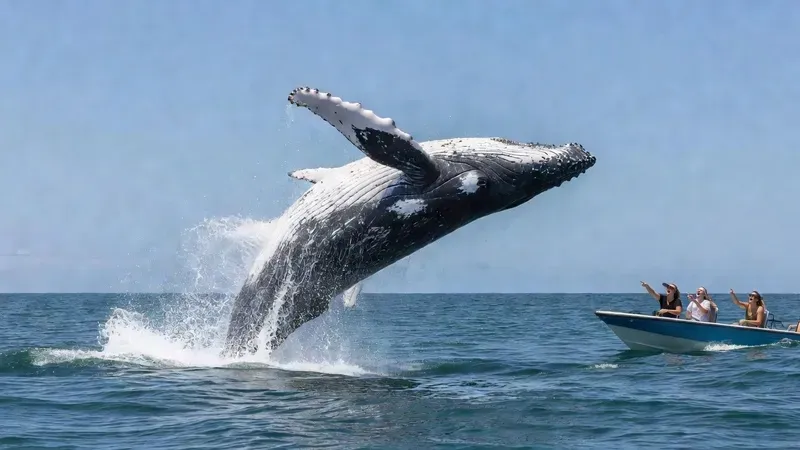
Top Rated Kailua-Kona: Whale Watching Cruise on the Big Island
Hear humpback whales singing through an underwater hydrophone and watch mothers with calves — only available December through mid-April when whales visit Hawaiian waters.
- Hear whales sing via underwater hydrophone
- See humpback mothers and calves
- Snacks and beverages on board
- Hotel pickup and drop-off
 from $122
Top Rated
from $122
Top Rated Kailua-Kona Manta Ray Night Adventure — Best-Rated on the Big Island
The #1 rated night tour on the Big Island. Watch giant manta rays glide beneath you as they feed on plankton lit by underwater lights — a truly…
- Giant manta rays up close in their natural habitat
- Snorkel option or ride-along (no swimming required)
- Warm shower on board after the snorkel
- GoPro rental available
 from $200
Top Rated — Perfect Score
from $200
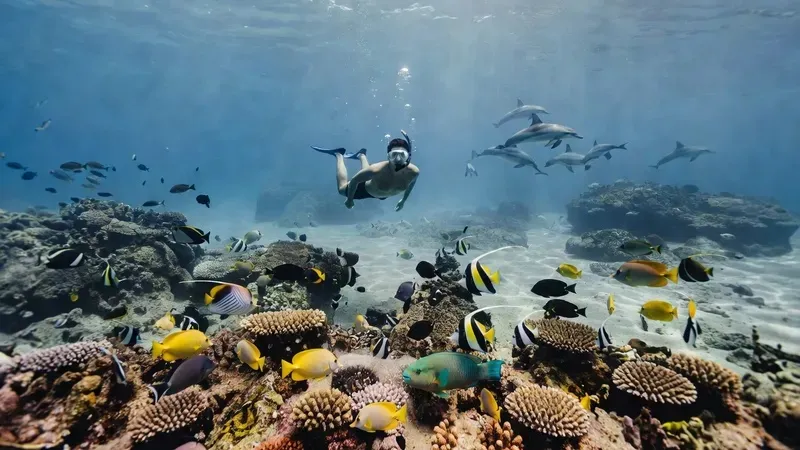
Top Rated — Perfect Score Big Island: South Kona Snorkeling & Coastline Exploration
The highest-rated snorkeling tour on the Kona coast. Visit 3 unique reef sites including Kealakekua Bay marine sanctuary, sea caves, and lava tubes on a rigid inflatable boat.
- 3 unique snorkeling sites including Kealakekua Bay marine sanctuary
- Sea caves, lava tubes, and a remote black sand beach
- Gourmet deli lunch included
- All snorkel gear, towels, and sunscreen provided
The Best Months to Visit Kona
April through October is the driest, warmest run of the year, with July the driest single month at 0.49 inches of rain and August the warmest at a normal high of 87.3°F. If your priority is dry days and warm water with no particular interest in whales, this stretch is the safer bet.
December through April is the other strong answer, not because the weather improves, January is actually the wettest month at 1.35 inches, but because it's the only window humpback whales are reliably in Hawaiian waters, peaking January to March. Neither window is a bad choice; the honest framing is dry-and-warm versus wet-but-whales, and Kona's rain totals are modest enough either way that the trade-off is smaller than it sounds.
Kona Weather Month by Month
These are the 1991 to 2020 climate normals for the airport station at Ellison Onizuka Kona International Airport (KOA), the closest official record to Kailua-Kona itself.
| Month | Conditions | Weather | Crowds | Verdict |
|---|---|---|---|---|
| January | Whale season begins | Warm, wettest month | High (holidays) | Good, whales arriving |
| February | Whale season builds | Coolest month | High (school breaks) | Good, coolest and whales |
| March | Peak whale season | Warming, drier | Moderate | Best overall for whales |
| April | Whale season tapers | Drier, warming | Moderate | Good, last of the whales |
| May | No whales | Dry, warm | Moderate | Good value, quieter |
| June | No whales | Dry, warming | Moderate to high | Solid, drier stretch |
| July | No whales | Driest month | High (summer) | Best for dry days |
| August | No whales | Warmest month | High (summer) | Warmest, driest run continues |
| September | No whales | Warm, dry | Moderate | Good value shoulder month |
| October | No whales | Warm, drier | High one week (IRONMAN) | Avoid Oct 10 week unless racing |
| November | Whale season begins late | Cooling, more rain returns | Moderate | Good, transitional |
| December | Whale season builds | Cooler, wetter | High (holidays) | Good, whales returning |
Read the Verdict column as a starting point, not a ranking; every month here is workable, the differences are in what you're optimizing for, dry days, whale odds, or avoiding one crowded week.
| Month | High | Low | Rain |
|---|---|---|---|
| January | 81.4°F | 68.6°F | 1.35 in |
| February | 81.5°F | 68.4°F | 1.17 in |
| March | 82.2°F | 69.7°F | 0.97 in |
| April | 83.2°F | 71.1°F | 0.63 in |
| May | 83.9°F | 72.7°F | 0.64 in |
| June | 85.2°F | 74.0°F | 0.76 in |
| July | 86.1°F | 74.9°F | 0.49 in |
| August | 87.3°F | 75.7°F | 0.54 in |
| September | 86.9°F | 75.1°F | 0.54 in |
| October | 86.2°F | 74.5°F | 0.89 in |
| November | 84.4°F | 72.4°F | 0.83 in |
| December | 82.3°F | 70.0°F | 1.06 in |
August is the warmest month at a normal high of 87.3°F; February is the coolest at 81.5°F high and 68.4°F low; July is the driest at 0.49 inches. These are typical figures from the NOAA National Centers for Environmental Information 1991-2020 climate normals; check the current forecast close to your dates, since any single week can run wetter or drier than the normal. Last verified: August 2026.
What Each Season Brings
Winter (December to February): Whale Season Opens
Highs run 81 to 82°F, the coolest stretch of the year but still warm by most standards. Rain is at its yearly high, January's 1.35 inches, though that's still light next to most tropical destinations. Whales start arriving in December and build through February.
Holiday weeks bring the year's heaviest crowds and the highest accommodation prices. The Whale Watching Cruise starts its season here.
Spring (March to May): Peak Whales, Thinning Crowds
Highs climb from 82 to 84°F, rain drops off fast, March averages under an inch. This is peak whale season, January to March, so March is the one month that stacks strong whale odds with improving weather. Crowds ease after spring break weeks pass, and prices soften with them.
Book whale trips with a little more lead time in March; April is the quieter, still-decent alternative as the season tapers.
Summer (June to August): Driest and Warmest
Highs run 85 to 87°F, and July's 0.49 inches is the driest month on the calendar. No whales this stretch, but the trade is the most reliably dry, warm water conditions of the year. Summer school-break crowds push prices up, especially July and August; book tours further ahead than in the shoulder months.
The manta ray night adventure runs unaffected by any of this, since it depends on plankton activity and darkness, not season.
Fall (September to November): Quiet, Then One Loud Week
Highs ease from 87 down to 84°F, rain ticks back up slightly by November. September and most of October are genuinely the best value shoulder season, warm, dry, thinner crowds, before the IRONMAN World Championship on Saturday, October 10, 2026 fills Kailua-Kona and drives up rates for days around it. November brings the first returning whales late in the month as rain increases again heading into winter.
Weeks to Avoid or Plan Around
The single clearest trap on the calendar is the IRONMAN World Championship, set for Saturday, October 10, 2026, in Kailua-Kona, with the professional men's and women's races on the same day for the first time since 2019. Kona accommodation and rental cars sell out and price up for the days around it. If you're not there to race or watch, plan your trip for a different week entirely rather than landing in the middle of road closures and a fully booked town.
Beyond that single week, the softer traps are holiday weeks (Christmas through New Year, and spring break in March) and cruise-ship days, when several ships in port at once fill morning tour slots fast. None of these make a month bad, they just mean booking further ahead if your dates land inside one.
How much of the year you need is a separate question, worked through in how many days you need in Kona, and the seasonal swing in room rates is part of what a Kona trip costs. If the rain matters more than the calendar, compare the two coasts in Kona or Hilo.
Best Season by What You Want
If you want the driest, most reliable weather
April through October, July and August are the driest single months.
If seeing whales matters most
January to March, peak season, with March pairing the best odds with improving weather.
If you're on a budget and want fewer crowds
September or early October, warm and dry with thinner crowds before IRONMAN week.
If you have fixed dates already booked
check the table above for your month; there's no genuinely bad month here weather-wise, only the one week to avoid if it's not intentional.
Best Time for the Water
Kona's ocean conditions stay fairly consistent year-round on the leeward coast, which is part of why manta ray and snorkeling tours run every month without a real off-season. The bigger variable is what's in the water rather than how calm it is: whales December through April, plankton activity driving the manta ray night trips year-round regardless of season.
Humpback whales are present in Hawaiian waters roughly December through April, peaking January to March. Federal law prohibits approaching within 100 yards, by boat or in the water, so any whale watching here is boat-based viewing at a distance, never a swim-with experience. Full season detail and month-by-month whale odds live on whale watching season in Kona.
Whales are the one genuinely seasonal thing on this coast. The month-by-month picture, and the federal rule keeping vessels and swimmers 100 yards off a humpback, is in our Kona whale watching season guide. The mantas are not seasonal, which is covered in our manta ray night dive guide.
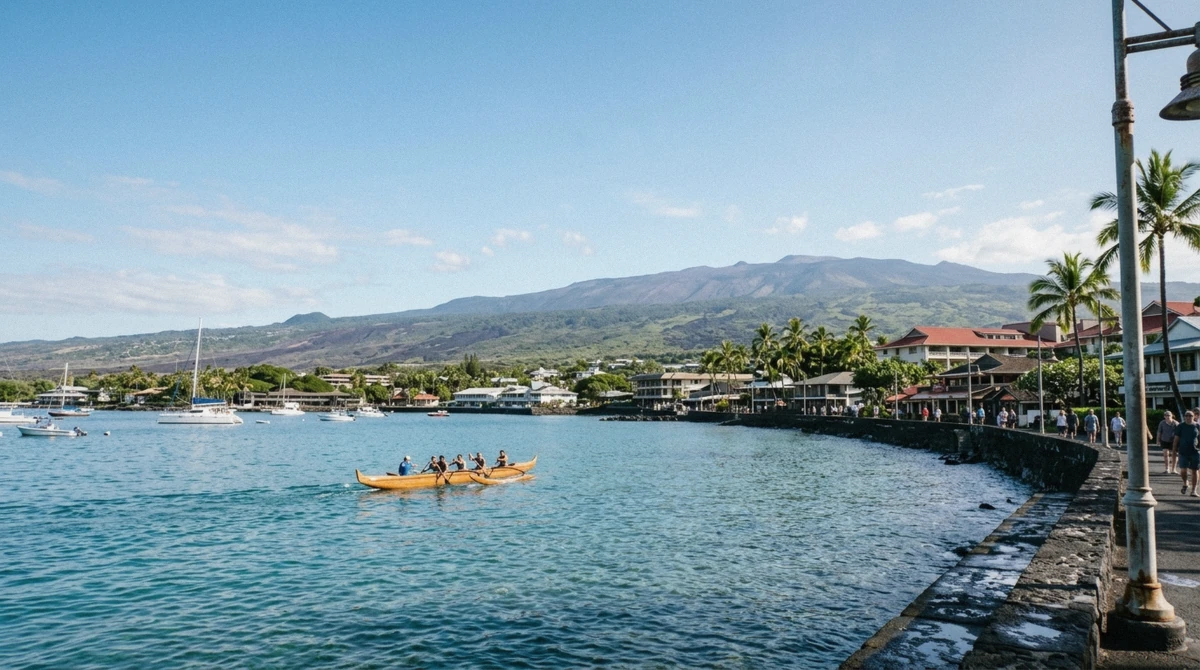
What Changes and What Does Not
What changes: rainfall (roughly doubling from July's driest to January's wettest, though both are modest totals), whale presence, and crowd levels around specific weeks. What doesn't change much: temperature. The spread between Kona's warmest month, August at 87.3°F, and coolest, February at 81.5°F, is about six degrees.
That's the real "Kona has no seasons" fact, not a sunshine count, an actual six-degree swing across twelve months, smaller than most destinations see between two consecutive weeks.
For contrast, Hilo on the island's east side averages 120.4 inches of rain a year against Kona airport's 9.87 inches, about twelve times as much. That gap exists because Kona sits in the lee of Mauna Loa and Mauna Kea, on one of the driest inhabited stretches of the island, while Hilo faces the weather systems head-on. The upslope coffee belt above Kona, roughly 800 to 2,500 feet, catches meaningfully more cloud and rain than the airport figure suggests, which is exactly why coffee grows there, though no official normal is published for that specific elevation band.
Packing for the Kona Climate
Light, breathable layers cover nearly the entire year given the six-degree temperature swing; a light jacket for boat trips and evening breezes is the only real seasonal adjustment, more useful December through February than in August.
The sunscreen detail catches almost every visitor off guard, and it's worth knowing before you pack rather than at the pharmacy register. State law, Act 104, in force since January 1, 2021, bans the sale and distribution of sunscreen containing oxybenzone or octinoxate anywhere in Hawaii without a prescription. Hawaii County goes further: Bill 167, in force since December 1, 2022, prohibits the sale or distribution in the county of any sunscreen whose active ingredient is anything other than titanium dioxide or zinc oxide, a mineral-only sales rule.
Both are sales restrictions, not personal-use bans, so a non-mineral sunscreen you already own and bring with you isn't illegal to use, but you will only be able to buy mineral sunscreen once you're here. Packing your own supply of mineral, reef-friendly sunscreen before you fly is the simplest way around the whole question.
Last verified: August 2026.
What to put in the bag
The climate is stable enough that the packing list barely changes month to month. Two things do catch people out: the altitude on any summit trip and the county sunscreen rule.
- Mineral sunscreen with titanium dioxide or zinc oxide, since Hawaii County has allowed only mineral sunscreen to be sold here since December 1, 2022
- A rash guard or long-sleeved swim top, which does more for a full day on the water than reapplying anything
- A fleece or insulated jacket if any part of the trip goes above the cloud line, where the temperature bears no relation to the coast
- A light rain shell for the upslope coffee belt and for the Hilo side, where the afternoon cloud is the norm
- Closed shoes with grip for lava, which cuts through thin soles
- Reusable water bottles, because the dry leeward air pulls more out of you than the temperature suggests
What Actually Affects Conditions
Most visitors assume Kona's weather runs like the rest of tropical Hawaii, rain-driven and unpredictable. The real driver is geography, not a generic tropical pattern: Kona sits in the rain shadow of Mauna Loa and Mauna Kea, which strips moisture out of the trade winds before they reach the coast. That's the actual mechanism behind the airport's 9.87-inch annual normal, not luck or a particularly dry year.
The counterintuitive part is that this rain-shadow effect barely touches temperature, only rainfall. That's why the month-to-month weather story here is almost entirely about how much it rains and whether whales are around, rather than about heat, and why the six-degree annual temperature swing holds regardless of which side of that rain-shadow line you're comparing.
One honest caveat: Kilauea's volcanic status changes without notice and affects air quality (vog) on both sides of the island independent of season. If your trip includes Hawaii Volcanoes National Park, check conditions the morning of your visit regardless of which month you're traveling in; what actually happens if a tour is cancelled for weather is covered in full on our weather-cancellations guide.
April through October is the best bet for dry, warm, predictable conditions, with July and August the driest single months. December through April is the strongest alternative if whale watching is a priority, worth the slightly higher rain totals for a real shot at humpbacks December through April, peaking January to March. The one week to actively plan around rather than land in is October 10, 2026, IRONMAN week, when the whole town books out and prices spike regardless of the otherwise favorable fall weather.
Whichever window you land on, book what runs in Kona month by month with your actual dates in mind rather than chasing a single perfect month that doesn't really exist here.
Frequently Asked Questions
What is the best month to visit Kona, Hawaii?
July and August are the driest and warmest; March is the strongest single month if whale watching matters, pairing peak season with improving weather.
What is the rainy season in Kona?
Kona doesn't have a dramatic rainy season the way much of Hawaii does; January is the wettest month at a normal 1.35 inches, still modest next to Hilo's east-side totals.
When can you see whales in Kona, Hawaii?
Roughly December through April, peaking January to March. Federal law keeps boats and swimmers at least 100 yards away, so viewing is boat-based. The whale watching cruise runs this window only.
Is there a bad time to visit Kona?
Not weather-wise, the temperature swing is only about six degrees all year. The one week worth avoiding unless you're attending is October 10, 2026, IRONMAN World Championship week, when accommodation and rental cars sell out and price up.
How hot does Kona get in summer?
August, the warmest month, runs a normal high of 87.3°F. The coolest month, February, still runs 81.5°F, so the seasonal swing is modest.
What should you pack for Kona weather?
Light layers year-round, plus mineral sunscreen. Hawaii County has sold only titanium dioxide or zinc oxide sunscreen since December 1, 2022, so bring your own supply if you use a non-mineral formula.
Does it matter if I book a tour in the morning or afternoon?
For most water tours, morning departures tend to catch calmer conditions before afternoon wind and cloud build over the coast; the south Kona snorkeling tour runs a morning departure for this reason.